The King of Huachicol
Fuel theft, political financing, and the early consolidation of military power under AMLO.
The murder of Sergio Carmona Angulo in November 2021 exposed a single network linking fuel-theft revenue, ruling-party campaigns, and the growing operational weight of Mexico's armed forces. Each of those threads has continued to run.
A Surgical Execution
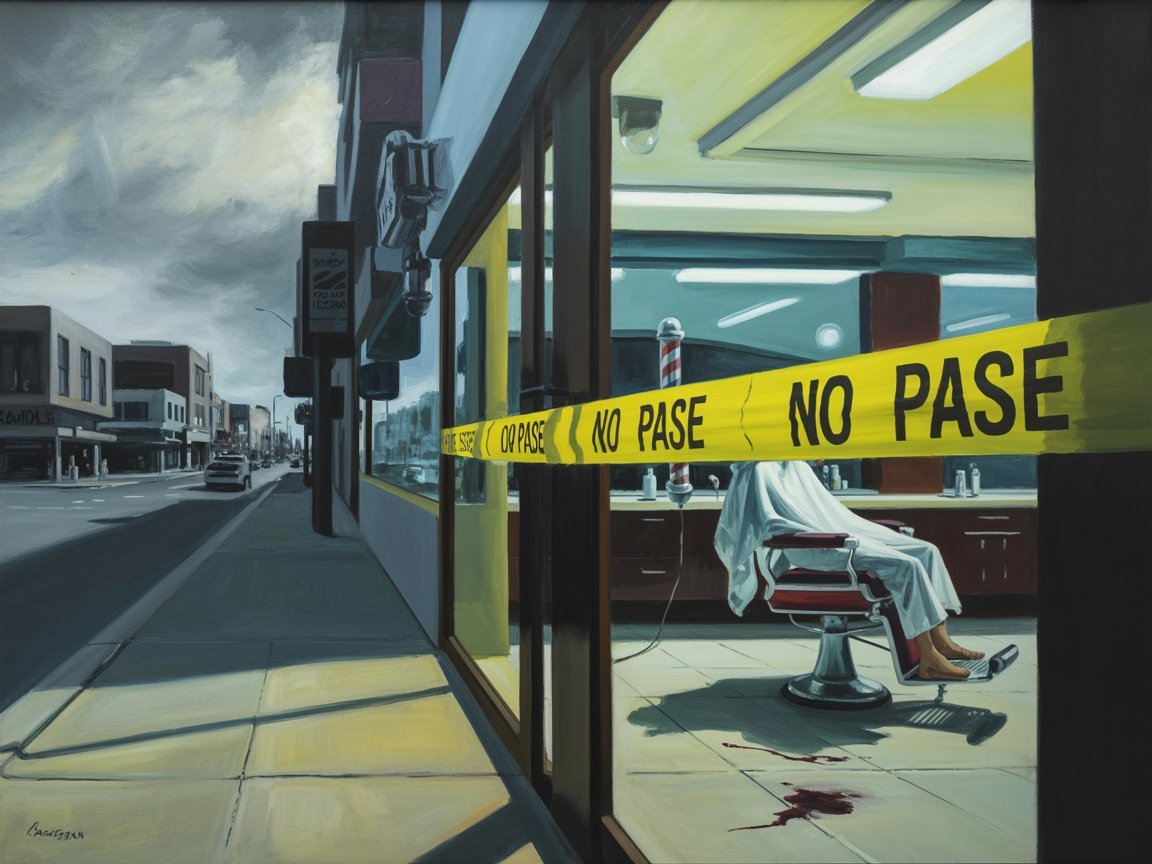
Sergio Carmona Angulo — known in Mexico as the King of Huachicol — was killed on November 22, 2021, at approximately 5:15 p.m., in a barber shop in San Pedro Garza García, in the metropolitan area of Monterrey, Nuevo León. San Pedro is one of the safest municipalities in the country. The public-safety camera system covering the area was offline at the time of the attack.
Local witnesses described the assault team as men with crew-cut haircuts, moving with coordinated precision. Carmona's bodyguards were outnumbered; his wife, Perla Sharaza McDonald Sánchez, was reportedly present. The operational signature — quiet, surgical, and supported by a failure of local surveillance infrastructure — points to planning well beyond a conventional cartel hit.
A Brother at the U.S. Border
Huachicol, in Mexican usage, covers the full illegal ecosystem of fuel theft, import, and distribution. Carmona's brother, Julio César Carmona Angulo, worked at the Customs office in Reynosa, Tamaulipas, where imported fuel tanks were registered under false descriptions such as vegetable oil. After his brother's murder, Julio César entered the U.S. Witness Security Program in February 2022.
The Carmona brothers sat at the intersection of two systems: a large-scale fuel-contraband operation running through Reynosa, and a political-financing channel that extended into senior ranks of Mexico's ruling party.
Financing the Ruling Party
Carmona held at least 12 properties registered in Texas and a similar number in the greater Monterrey area. More significant than the portfolio were the relationships it financed. Among the politicians supported directly or indirectly were Tamaulipas governor Francisco García Cabeza de Vaca (PAN) and governor-elect Américo Villarreal Anaya (Morena).
After Carmona's death, forensic analysis of his mobile phone and interviews with the pilot who operated his frequently chartered aircraft exposed a pattern: chartered jets used for Morena rallies across the country, and a roster of political beneficiaries including Erasmo González Robledo, Olga Sosa Ruiz, Carmen Lilia Canturosas, Eduardo Gattás, Héctor Villegas, and Eduardo Hernández. Campaigns in Nuevo León, Baja California Sur, Sonora, Sinaloa, and Nayarit received financial support, aircraft use, armored ground vehicles, personnel, and related assets.
The Video Scandals
The Carmona disclosures arrived into an already saturated environment. Pío López Obrador, brother of the president, had been recorded receiving cash donations from David León Romero for the 2018 campaign — a video broadcast by Carlos Loret de Mola on LatinUS and subsequently referred to the Attorney General's Office (Fiscalía General de la República).
Reporting in Mexican media during this period indicated that approximately 75 videos exist with potential to damage the president and his immediate family, of which roughly 12 are considered highly incriminating. Copies are understood to be held across multiple independent parties, each with its own leverage. That distribution — rather than any single release — is what has kept the archive in circulation without yet reshaping the political landscape.
The Militarization Shift
In October 2020, President López Obrador held a private meeting with former Defense Minister General Salvador Cienfuegos. The meeting is widely regarded as an inflection point: after it, the president moved sharply from public criticism of militarization toward active support for expanding the Ministry of Defense's role in civilian domains.
That expansion now covers the National Guard, Customs offices, and most maritime ports and airports. A civilian-law-enforcement agency designed by statute has been placed, in practice, under military command. The administrative architecture is mixed — some personnel on Guardia Nacional payroll, others on Army or Navy payroll — and a presidential decree is moving to consolidate administrative control inside the Ministry of Defense without passing through Congress.
The Takeaways
Fuel-theft networks in northern Mexico continue to function as political-financing infrastructure, with the Reynosa customs corridor at the center of the 2018–2021 cycle.
Carmona's death did not dismantle the system; it reassigned it. The weekly tanker arrivals at Altamira observed from 2023 onward suggest the route moved from land to sea rather than shutting down.
The video-archive pattern — multiple holders, no single release — is a stable feature of Mexican politics and should be understood as leverage, not as evidence on the path to prosecution.
Concentration of Customs, ports, and law enforcement inside the armed forces narrows the channels through which independent oversight can operate, and raises the threshold for private operators expecting transparent administrative process.
The Intelligence Research Desk at GO PRIVATELY LLC
All information sourced from publicly available intelligence. Conditions evolve; verify current status before operational decisions.