Mexico in the First 42 Hours: A Real-Time Intelligence Assessment
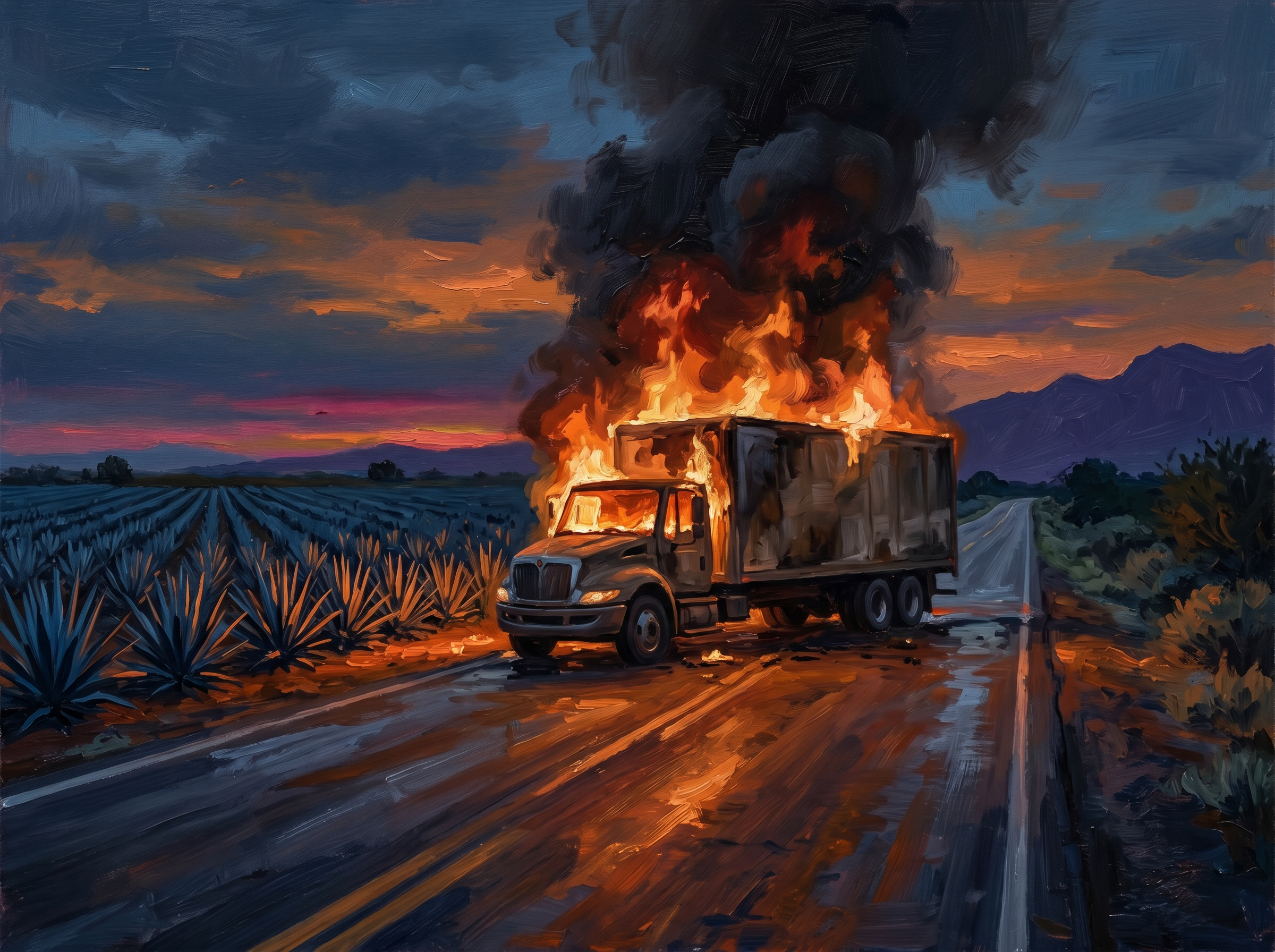
On February 22, 2026, Mexican federal forces killed CJNG leader El Mencho. The cartel’s response was immediate and coordinated. Here is what we know 42 hours in — and what to do with it.
On February 22, 2026, Mexican federal forces — with U.S. intelligence support — killed Nemesio Rubén Oseguera Cervantes, known as El Mencho, in Tapalpa, Jalisco. He was the leader of the Jalisco New Generation Cartel (CJNG), Mexico’s most powerful criminal organization.
CJNG cells responded within hours. More than 250 narcoblockades appeared across 20 states. At least 25 National Guard troops and more than 30 cartel operatives were killed in the engagements that followed. Airports in Puerto Vallarta and Guadalajara recorded 370-plus flight cancellations. Between 12,000 and 15,000 foreign tourists became stranded in the region.
This report was prepared 42 hours after the operation. The situation is entering a stabilization phase. The crisis window is not closed.
What Is True Right Now
As of February 23 at 8:30 PM CST, no significant new security incidents have occurred overnight or through today. Most blockades have been cleared. Guadalajara’s metro and bus systems resumed with National Guard escorts. Airports in Puerto Vallarta and Guadalajara are resuming operations.
Three challenges remain active. First, mobility: road travel in Jalisco and Michoacán carries elevated risk, and thousands of foreign tourists are still awaiting outbound flights. Second, supply chain: Port of Manzanillo land access is disrupted, with freight delays of 24 to 48 hours affecting U.S.–Mexico corridors. Third, containment: federal forces cleared the initial blockades but have not yet established sustained territorial control. Sporadic incidents remain possible through February 26.
For travelers stranded in Puerto Vallarta or Guadalajara: stay at your hotel. These are the lowest-risk environments available. Do not move to the airport without a confirmed seat. Monitor airline apps every two to four hours and accept the first available seat, even if departure is 48 to 72 hours out. Use hotel-arranged transfers for airport transport — solo ride-hail increases exposure without improving your exit timeline. Register with the U.S. STEP program or Canadian consular registration for official updates.
The planning horizon for baseline mobility restoration is 48 to 72 hours.
Not every part of Mexico is affected. Mexico City, Querétaro, Aguascalientes, and the Riviera Maya have experienced zero security incidents related to this event. Businesses and travelers in these locations should maintain standard operating procedures.
The Supply Chain Dimension
The Port of Manzanillo handles approximately 3 million TEUs annually — roughly 45% of Mexico’s containerized imports and 70% of Asian cargo entering the country. The port itself remains operationally open. Land-side access is the problem: highway blockades between theport and Guadalajara distribution hubs have severely constrained outbound freight.
Current impacts include 24 to 48-hour delays on time-sensitive cargo — particularly automotive just-in-time components and electronics — and drayage companies demanding armed escorts at a 15 to 25% cost premium. In the Bajío manufacturing belt, plants belonging to Honda, Mazda, GM, Volkswagen, and Airbus are reporting inbound material delays despite labor attendance above 85%.
Supply chain security firms Overhaul and C.H. Robinson have confirmed significant disruption on routes toward Laredo, Nogales, and Otay Mesa. Some carriers have rerouted via Veracruz, adding one to two days of transit time. For organizations with concentrated Manzanillo exposure, activating secondary sourcing or air freight for critical components now — before conditions worsen — is the right move.
What This Means
El Mencho’s death is a significant tactical outcome and a source of near-term instability. CJNG will not dissolve. Succession dynamics create the most dangerous weeks in the immediate aftermath.
The crisis is geographically concentrated. Mexico City, Querétaro, Baja California Sur, and the Riviera Maya are not in an affected zone. Standard protocols apply.
Government declarations of “control” should be independently verified before acting on them. Ground conditions are fluid, and official statements are currently aspirational, not descriptive.
AI-generated imagery of events that never occurred has already been confirmed in circulation — including deep-fake footage of airport violence. Treat social media content as unverified until corroborated by consular bulletins or professional security sources.
The 48 to 72-hour window is the decisive planning horizon. Hold positions where possible and move only on confirmed information.
The Intelligence Research Desk at GO PRIVATELY LLC
Current as of 8:30 PM CST, February 23, 2026. All information sourced from publicly available intelligence. This report reflects conditions at the time of issue; consult current advisories before making operational decisions.