The Morena List: What Twelve Indictments Mean for Your Mexico Position
By Walter M. Farrer
The first indictment was unusual. The second was a signal. The third confirmed a campaign.
Then a general walked across the border and into US custody. Then came the recording. Then came the quiet agreement no one was supposed to know about.
Since April 29, 2026, the US Department of Justice has indicted the sitting governor of a Mexican state, two of his senior officials, and placed at minimum eight more senior Morena politicians under active federal investigation — including four sitting governors, a sitting senate president, the chairman of Mexico's ruling party, and the man who served as Mexico's Secretary of the Interior. The Southern District of New York is running the prosecution. That is the office that put El Chapo away for life.
What has developed since the April 29 indictment is not simply a diplomatic standoff. The public confrontation — Mexico defending sovereignty, Washington maintaining pressure — is real. But behind it, a different story has been assembling for weeks, piece by piece, in back channels, detention facilities, and consulate meeting rooms. The general in the New York courtroom is talking. Two governors are negotiating. And according to investigative journalist Anabel Hernández — citing government insiders and Cancillería contacts — the Sheinbaum administration quietly accepted a commitment to deliver Rubén Rocha Moya to US courts before the end of June.
This article publishes two days before that deadline.
Understanding what has already happened — inside and outside that courtroom — is now a baseline requirement for any organization with regulatory, contractual, or operational exposure in Mexico.
I. The Escalation Sequence
The DOJ's approach follows a three-stage pattern that has now repeated with enough consistency to be mapped and anticipated.
Stage one: visa revocation. The earliest public signal. A US official's travel visa is revoked — quietly, without public announcement. The State Department notifies the Mexican government. Mexican authorities do not disclose it. Journalists confirm it. The subject denies or declines to comment.
Stage two: Significant Public Benefit Parole. The revoked visa is replaced by a category of entry instrument reserved for individuals who are cooperating with US law enforcement investigations. This is not a humanitarian designation. It is an investigative one. Its use indicates that the individual is either providing information to US authorities or is under active investigation in which the US is managing their access and movements.
Stage three: indictment. The Southern District of New York unseals charges. The sequence that preceded Rubén Rocha Moya — visa revocation, then Parole instrument — is now observable in at least two additional sitting governors.
Governors Alfonso Durazo of Sonora and Américo Villarreal of Tamaulipas have both had their visas revoked and are now entering the US under Significant Public Benefit Parole, as reported by the LA Times and Puente News Collaborative on June 3. Senator Adán Augusto López — former Interior Secretary, one of the most consequential figures in the López Obrador administration — had his visa revoked, according to Raymundo Riva Palacio on June 9. López declined to comment.
What the sequence did not anticipate — until May 11 — is a fourth stage: voluntary surrender.
Raymundo Riva Palacio, writing in El Financiero on May 19, reported that the DOJ has already prepared dossiers on at least two more officials beyond the current twelve — one governor, one party or state leader. The names have not been disclosed. The escalation, Riva Palacio wrote, will continue.
II. The General in Chains — and the Finance Secretary Beside Him
On May 11, 2026, at 3:03 PM Arizona time, retired Army General Gerardo Mérida Sánchez walked across the border crossing at Nogales — on foot, of his own accord — and surrendered to the US Marshals Service.
He is 66 years old. He commanded the 25th Military Zone in Puebla before becoming Secretary of Public Security of Sinaloa under Rubén Rocha Moya, a position he held from September 2023 to December 2024. He is accused by the SDNY of accepting more than $100,000 per month in cash bribes from Los Chapitos — the Sinaloa Cartel faction led by El Chapo's sons — in exchange for actively protecting their operations: alerting the cartel at least ten times to planned police raids, enabling their escape from enforcement operations, and providing law enforcement intelligence to traffickers.
The charges carry a mandatory minimum of 40 years. Potentially life.
On May 15, he appeared before Judge Sarah Netburn in Manhattan. He was transferred to the Metropolitan Detention Center in Brooklyn — where he is now housed alongside Ismael "El Mayo" Zambada, Rafael Caro Quintero, and Nicolás Maduro. He pleaded not guilty.
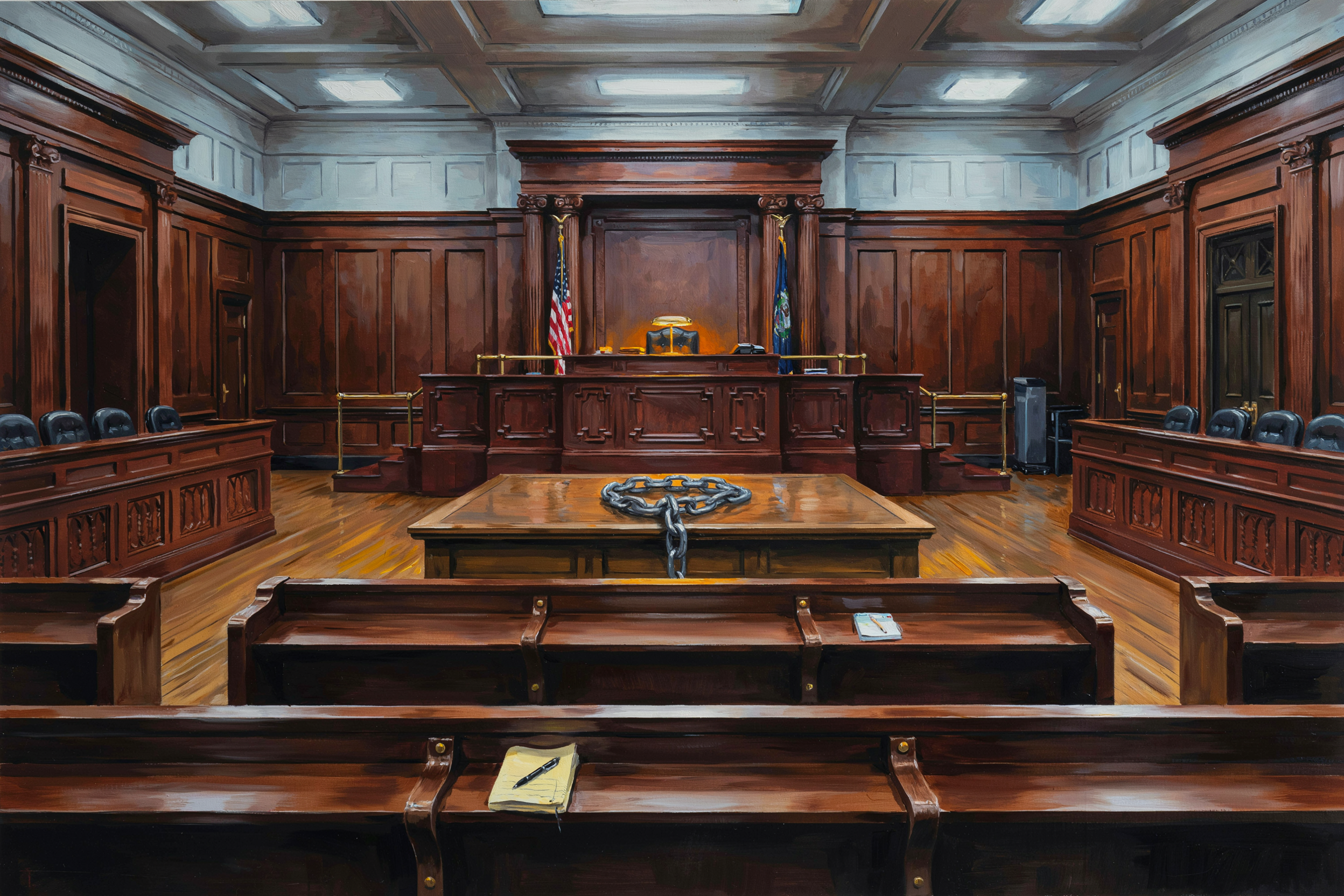
On June 1, he appeared before Judge Katherine Polk Failla for his first formal hearing before the SDNY. He arrived in a khaki prison uniform, chained at the feet, hands, and waist. His attorney has indicated negotiation posture. The judge stated from the bench that evidence against him is "abundant." His next hearing is scheduled for August 4.
Claudio Ochoa Huerta, writing in El Universal on June 7, described the courtroom scene in a column titled "El General Encadenado" — The General in Chains. His observation: this was not a routine arraignment. The visual of a Mexican military general in US federal restraints, in the same courthouse processing drug lords and foreign heads of state, appeared designed to send a message beyond the immediate proceedings. The first rows of the courtroom were reserved for DEA officers and federal prosecutors. The hearing lasted minutes. The image lasted longer.
Mérida Sánchez did not walk across that border alone.
Four days later — on May 15, the same week — Enrique Díaz Vega, the former Secretary of Finance of Sinaloa under Rocha Moya, also surrendered voluntarily to US authorities. He is now in US federal custody.
Political analyst Francisco Garfias, reporting on both surrenders, identified them precisely: Mérida as "el secretario de seguridad" and Díaz Vega as "el secretario de la lana" — the money man. The prosecution now holds both the security apparatus and the financial apparatus of the Rocha Moya administration. The general who managed cartel protection operations and the official who managed cartel financial flows are both in US federal facilities, both in negotiation posture. The evidentiary architecture being assembled around the governor still in Culiacán is not theoretical. It is institutional.
What the surrenders mean strategically:
First — both Mérida Sánchez and Díaz Vega served directly under the indicted governor. The SDNY indictment states explicitly that Mérida carried out his cartel-protection activities "as Secretary of Public Security of Sinaloa, under the orders of Rubén Rocha Moya." If either reaches a cooperation agreement — which legal analysts covering the case describe as the most probable outcome given voluntary surrenders — the information they can provide about Rocha Moya's direct involvement is prosecutorially decisive. Every $100,000 monthly payment, every advance raid warning, every financial transaction is a chain that leads to the governor who authorized it.
Second — the Secretaría de la Defensa Nacional (SEDENA), led by General Ricardo Trevilla Trejo, did not oppose Mérida's surrender. According to sources in the Mexican government cited by reporters covering the case, it was General Trevilla who ordered Mérida to surrender — and to bring documentation of Rocha Moya's involvement with him. The Mexican military cooperated with the DOJ at the precise moment Claudia Sheinbaum's government was publicly insisting on sovereignty and demanding evidence. SEDENA broke the impunity pact from the inside. That claim has not been confirmed institutionally; SEDENA has publicly distanced itself from Mérida. But it has not been denied by the sources who reported it, and the pattern of the surrender — voluntary, immediate, with legal representation in place — is consistent with coordinated institutional preparation rather than individual panic.
Third — the prosecution is not pursuing drug trafficking charges alone. Riva Palacio wrote in El Financiero on May 13 that "van a ser juzgados en una corte federal en Manhattan, presentes o no, y serán acusados por narcoterrorismo" — they will be charged with narcoterrorism. The Sinaloa Cartel was designated a Foreign Terrorist Organization earlier this year. That designation is not semantic. Prosecution under a terrorism framework carries different secondary liability exposure for companies that operated within the regulatory and security environment these officials controlled. The question for corporate legal teams is not only whether a specific official is charged — it is what authorization framework his designation as a narco-terrorist retroactively places on approvals issued under his watch.
III. The Recording That Changed the Calculation
On June 22, journalist Héctor de Mauleón published a recorded conversation in El Universal — titled "El audio en que Marina del Pilar busca un acuerdo con EU" — revealing that Marina del Pilar Ávila Olmeda, sitting governor of Baja California, had been privately approaching US intelligence contacts through intermediaries described as "external FBI advisors."
In the recording, Ávila confirms US agencies have been seeking her out. She references her US attorney, Michael Nadler, kept deliberately distant from Baja California to prevent leaks. She discusses a proposed meeting at the US consulate in Tijuana to explore a private arrangement — sharing information in exchange for reduced legal consequences on charges she acknowledges may be coming.
The key line from the audio: "Me han buscado las agencias... y yo en la mejor disposición porque quiero resolver eso y aclarar cualquier cosa." — "The agencies have sought me out... and I am fully disposed because I want to resolve this and clarify anything."
Ávila confirmed the recording's authenticity to Semanario ZETA on June 22 while denying any secret agreement. Retired Supreme Court Justice José Ramón Cossío, appearing on Aristegui en Vivo, said the recording raises questions her explanation does not answer.
A precision point that matters: Ávila's investigation is not connected to the Sinaloa Cartel case against Rocha Moya. Her alleged cartel links involve the Jalisco New Generation Cartel — CJNG — a separate network entirely. Código Magenta reported as early as May 9 that she was the likely next governor to face formal charges, under investigation for narcotrafficking, weapons, money laundering, and organized crime through a CJNG money laundering network. Investigative journalist Anabel Hernández has similarly identified Senator Adán Augusto López as the next imminent indictment target — also on the CJNG track, not the Sinaloa one. The DOJ is not running one campaign. It is running two parallel cartel campaigns simultaneously, with distinct investigation architectures converging on the same political movement.
What emerged on June 24 — two days after the Ávila audio — changes the stakes of her individual negotiation entirely.
Independent journalist Alberto Treviño (Mundo Beto TV) reported on June 24 that both Marina del Pilar Ávila and Rubén Rocha Moya are now negotiating not merely to reduce their own charges, but to become protected witnesses against AMLO himself. The former president. The founder of the movement. The man whose political apparatus built the regulatory and security structure that the DOJ is now dismantling layer by layer.
If confirmed — and Treviño's report converges directly with investigative journalist Anabel Hernández's June 19 Narcosistema reporting on the private bilateral meeting of June 12 — the nature of this campaign is no longer a campaign against Morena's political operators. It is a campaign that may be building toward the man at the center of the entire architecture.
IV. The Private Agreement
On June 12, a bilateral security meeting was held at the US Embassy in Mexico City. Senior figures from both governments were present.
According to investigative journalist Anabel Hernández — citing government insiders and Cancillería contacts, reporting on June 19 via Narcosistema and Aristegui Noticias — what emerged from that meeting was not a public statement. It was an agreement: the Sheinbaum government quietly accepted a commitment to deliver Rubén Rocha Moya to US federal courts before the end of June 2026.
The official public posture has not changed. Sheinbaum has continued to frame the DOJ campaign in terms of sovereignty and to suggest political motivations. None of that changed on June 12. What changed was the private position — and, by Hernández's reporting, the private commitment.
By June 20, Hernández was reporting separately that back-channel signals were being sent to Rocha Moya himself — to resolve his situation through surrender, as Mérida Sánchez had done. The back channel and the public channel are, at this moment, saying opposite things.
Hernández's track record on this story is worth noting. She reported in March 2025 — more than a year before the April 29 indictment — that the SDNY dossier included AMLO himself, two sitting governors, Mario Delgado, and Ricardo Monreal. She reported Rocha Moya's financial accounts were frozen on May 6, before Sheinbaum acknowledged it. She reported the Adán Augusto López indictment as "inminente" in May. Each of those calls proved accurate.
This article publishes on June 28. The reported end-of-June deadline is June 30. The reader is holding an intelligence assessment published on the eve of what may be the campaign's most consequential single event: the voluntary or compelled surrender of the sitting governor of Sinaloa to US federal custody.
V. The Twelve Names
As of June 25, 2026, twelve Mexican politicians are publicly under US federal investigation or indictment:
Rubén Rocha Moya — Governor of Sinaloa (on leave). Indicted April 29, 2026 (SDNY, Case S9 23 Cr. 180). Conspiring with Los Chapitos to import fentanyl, heroin, cocaine, and methamphetamine. Minimum 40 years; potentially life. Currently reported hiding on a ranch in northern Sinaloa with only state police escort — no federal protection. DEA conducting active operations to detain him (Riva Palacio / Infobae, June 18). His former security secretary and finance secretary are in US federal custody. According to two independent investigative sources, he is currently negotiating the terms of his own surrender.
Gerardo Mérida Sánchez — General (retired); former Secretary of Public Security of Sinaloa under Rocha Moya. Named in the same SDNY indictment. Voluntarily crossed the US border May 11. Currently detained at the Metropolitan Detention Center, Brooklyn — the same facility housing El Mayo Zambada and Rafael Caro Quintero. First formal SDNY hearing June 1; judge confirmed "abundant evidence." Next hearing August 4. Negotiation posture confirmed. He is the first of the ten co-accused to appear before the SDNY.
Enrique Díaz Vega — Former Secretary of Finance of Sinaloa under Rocha Moya. Surrendered voluntarily May 15 — the same week as Mérida Sánchez. Now in US federal custody. Francisco Garfias called him "el secretario de la lana." The prosecution holds both the security and financial apparatus of the Rocha Moya administration.
Enrique Inzunza Cázarez — Morena senator from Sinaloa. Named in the April 29 indictment alongside Rocha Moya.
Juan de Dios Gámez Mendívil — Mayor of Culiacán (on leave). Indicted alongside Rocha Moya. DEA active operations underway to detain and extradite.
Alfonso Durazo — Governor of Sonora. Under active US investigation for cartel links. Previously served as Secretary of Public Security under AMLO — Mexico's top federal security official. Visa revoked. Entering US under Significant Public Benefit Parole.
Américo Villarreal — Governor of Tamaulipas. Under active US investigation for huachicol — illegal fuel theft and trafficking — and cartel connections. Visa revoked. Entering US under Significant Public Benefit Parole. Tamaulipas: 13,817 documented enforced disappearances — highest of any Mexican state.
Adán Augusto López Hernández — Senator, Morena. Former Governor of Tabasco and former Secretary of the Interior. Visa revoked June 9. Investigated for organized crime connections — linked to CJNG network, not Sinaloa Cartel. Per Anabel Hernández (May 2026), a formal indictment is described by government sources as "inminente." Declined all comment.
Alfredo Ramírez Bedolla — Governor of Michoacán. Under investigation in the context of the broader DOJ campaign.
Marina del Pilar Ávila Olmeda — Governor of Baja California. Under investigation for alleged ties to CJNG-linked money laundering networks — a separate investigation track from the Sinaloa Cartel case. Visa revoked. As of June 22: privately seeking a negotiated arrangement with US intelligence agencies through a US attorney retained in secret. As of June 24: independently reported to be negotiating protected witness status against AMLO himself. Her state encompasses critical cross-border LNG and pipeline infrastructure.
Gerardo Fernández Noroña — President of Mexico's Senate. Named in the broader investigation context.
Mario Delgado Carrillo — President of the Morena party. Under investigation.
Ricardo Monreal Ávila — Senator; former Morena floor leader. Under investigation.
The aggregate picture: sitting governors, a sitting senate president, the ruling party's national chairman, a former interior secretary, a retired military general who is physically in US federal custody, a state finance secretary who is also in US federal custody. Two of those officials are reportedly negotiating as protected witnesses against the president who built the movement they served. This is not a campaign against cartel members. It is a campaign against the political and institutional layer above them — and it is now reaching toward the architect of that layer.
VI. The Energy Sector Exposure Map
Three states in the investigation cluster are directly material to US-connected energy operations.
Tamaulipas. CENAGAS pipeline infrastructure. LNG export facilities. Natural gas transit between the US and Mexico. Governor under investigation for fuel theft and cartel connections. 13,817 documented enforced disappearances. Every regulatory authorization issued under Villarreal's administration carries a question it did not carry sixty days ago.
Sonora. Cross-border manufacturing, critical mineral extraction, power infrastructure. Governor under investigation — the same man who served as Mexico's top federal security official under AMLO. Durazo knew where the cartels were. The allegation is that he knew what to do for them.
Baja California. Sempra Energy's LNG infrastructure. Cross-border pipeline systems linking California and Mexican gas markets. Governor under investigation for CJNG money laundering ties — and, as of June 22, privately seeking terms with US intelligence before formal charges arrive. As of June 24, independently reported to be negotiating as a protected witness against AMLO. The regulatory environment for LNG infrastructure in Baja California is now administered by someone who has retained a US attorney in secret, is discussing cooperation arrangements at the US consulate in Tijuana, and may be preparing to provide federal testimony against the former president.
The Mérida Sánchez and Díaz Vega cases add specific exposure vectors that energy sector legal teams should examine together. Mérida is accused of providing law enforcement intelligence to cartels while serving as the top security official of a state where energy infrastructure operates. Díaz Vega managed the financial apparatus of that same state. If either cooperates — and voluntary surrender is universally read by legal analysts covering the case as the posture of someone who intends to cooperate — their testimony may produce information about Rocha Moya's direct involvement in regulatory and security decisions affecting Sinaloa's energy and industrial sector.
The broader exposure remains: Pemex joint ventures, farm-out agreements, and pipeline easements issued or approved with the participation of any official now under US federal investigation face potential legal challenge. The question is not whether those assets are compromised — it is whether the authorizations underpinning them can withstand the scrutiny that is now, demonstrably, being applied.
VII. The Morena-as-Criminal-Organization Scenario
Multiple sources have reported that the DOJ has developed a contingency plan: if Mexico does not cooperate with extraditions, the DOJ would pursue designation of Morena as a criminal organization under US law.
Riva Palacio wrote in El Financiero on May 15: "Esta postura no solo compromete la imagen del movimiento obradorista, sino que abre la puerta a que el partido sea clasificado bajo la etiqueta de organización terrorista." The party's exposure to terrorist-organization classification, he argued, is not a theoretical scenario — it is a live legal question given the Sinaloa Cartel's existing FTO designation.
This scenario is more constrained now than it was two weeks ago — because the capitulation that would prevent it appears to be underway. If the Hernández reporting holds, Mexico has already agreed to deliver Rocha Moya. If the Mundo Beto TV reporting holds, two of the campaign's principal targets are preparing to testify against AMLO. These outcomes represent a different trajectory than the one requiring the Morena designation option as leverage.
But the legal architecture remains. For organizations with Mexican regulatory exposure, the compliance question under a designation scenario is structural: does the underlying authorization trace to conduct now federally characterized as criminal? Secondary liability frameworks — RICO, OFAC-adjacent theories, FCPA exposure for companies that benefited from cartel-facilitated regulatory approvals — are live questions regardless of whether the designation option is ultimately exercised. The prosecution under narcoterrorism statutes, which Riva Palacio and multiple legal analysts confirm is the intended framework, does not require a party designation to elevate secondary exposure. It is already elevated.
For context: the US State Department designated two Brazilian criminal organizations as Foreign Terrorist Organizations in June 2026, effective immediately. The policy direction in the hemisphere is not uncertain.
VIII. A Note on Context
On June 24, Mexico defeated the Czech Republic 3-0 at the Estadio Azteca — finishing the FIFA World Cup group stage with three wins and no goals conceded, a result the country had never achieved. Guillermo Ochoa, 40, appeared at his sixth World Cup to a standing ovation from 80,000 people. Seventeen-year-old Gilberto Mora became the youngest player to start a World Cup match in 24 years.
That is also Mexico. The country's depth, pride, and talent are real. The celebration at the Azteca on June 24 was genuine and well-earned.
The crisis documented in this article is not a statement about Mexico. It is a statement about a specific political structure and the legal pressure being applied to it from outside. The organizations best positioned to navigate this environment are not those who view Mexico through the lens of crisis alone — but those who understand both the country's extraordinary resilience and the specific, measurable risks embedded in the current regulatory and political landscape. That combination of clarity and respect is what serious advisory work requires.
IX. What to Do with This Information
First: authorization provenance. For every material permit, concession, easement, and contract in Mexico, identify which official issued, approved, or counter-signed it. Map those names against the current investigation list. The Mérida Sánchez and Díaz Vega cases make Sinaloa an immediate priority. The Ávila audio and her escalating witness negotiations make Baja California one as well.
Second: counterparty exposure. Joint venture partners, contractors, and regulatory liaisons in Tamaulipas, Sonora, and Baja California warrant renewed due diligence. The security environments those governors administered — and that Durazo, previously Mexico's top federal security official, oversaw nationally — are now under direct federal scrutiny.
Third: contingency framing. Brief legal and security teams on the narcoterrorism prosecution framework and its secondary liability implications. The Morena designation scenario remains a tail risk requiring a pre-positioned response, even as the private negotiation track appears to be advancing. The organizations with this analysis prepared before August 4 — the date of Mérida Sánchez's next hearing — will be in a different position from those who encounter it for the first time in a press release.
Fourth: timeline monitoring. June 30 is a reported deadline. If the Hernández reporting holds, the delivery of Rocha Moya to US custody before June 30 is the single event most likely to accelerate every downstream development: additional surrenders, witness cooperation, expanded indictments. The list Riva Palacio describes — two additional prepared dossiers, one governor, one party leader — does not shrink when the principal target surrenders. It typically grows.
The list will grow before it contracts. The general in chains is not the only one talking.
For organizational exposure analysis, jurisdiction-specific regulatory risk review, or security briefings on Mexico operations, contact GO PRIVATELY LLC at aprivateoffice.com.
The Intelligence Research Desk at GO PRIVATELY LLC
Analysis prepared June 26, 2026.
Sources: US DOJ / SDNY Case S9 23 Cr. 180 (April 29, 2026); Infobae (May 15, May 16, June 1, June 18, June 19); El Debate (May 16, June 1); El País (May 29, June 1, June 23); Claudio Ochoa Huerta / El Universal (June 7); Héctor de Mauleón / El Universal (June 22); Semanario ZETA (June 22); Aristegui en Vivo / José Ramón Cossío (June 23); LA Times / Puente News Collaborative (June 3); Raymundo Riva Palacio / El Financiero (May 13, May 15, May 19, June 4); Raymundo Riva Palacio / Infobae (June 18); Francisco Garfias (May 15); Bibiana Belsasso (May 28, June 3); Código Magenta / Ramón Alberto Garza (April 29, May 9, May 15); Anabel Hernández / Narcosistema (March 2025, May 13, May 15, June 19, 2026); Alberto Treviño / Mundo Beto TV (June 24, 2026); ABC30 / AP (June 24); Reuters (multiple).