Mexico City's Attorney General Vote
Threats, an armed intimidation incident, and a ratification denied by the required majority.
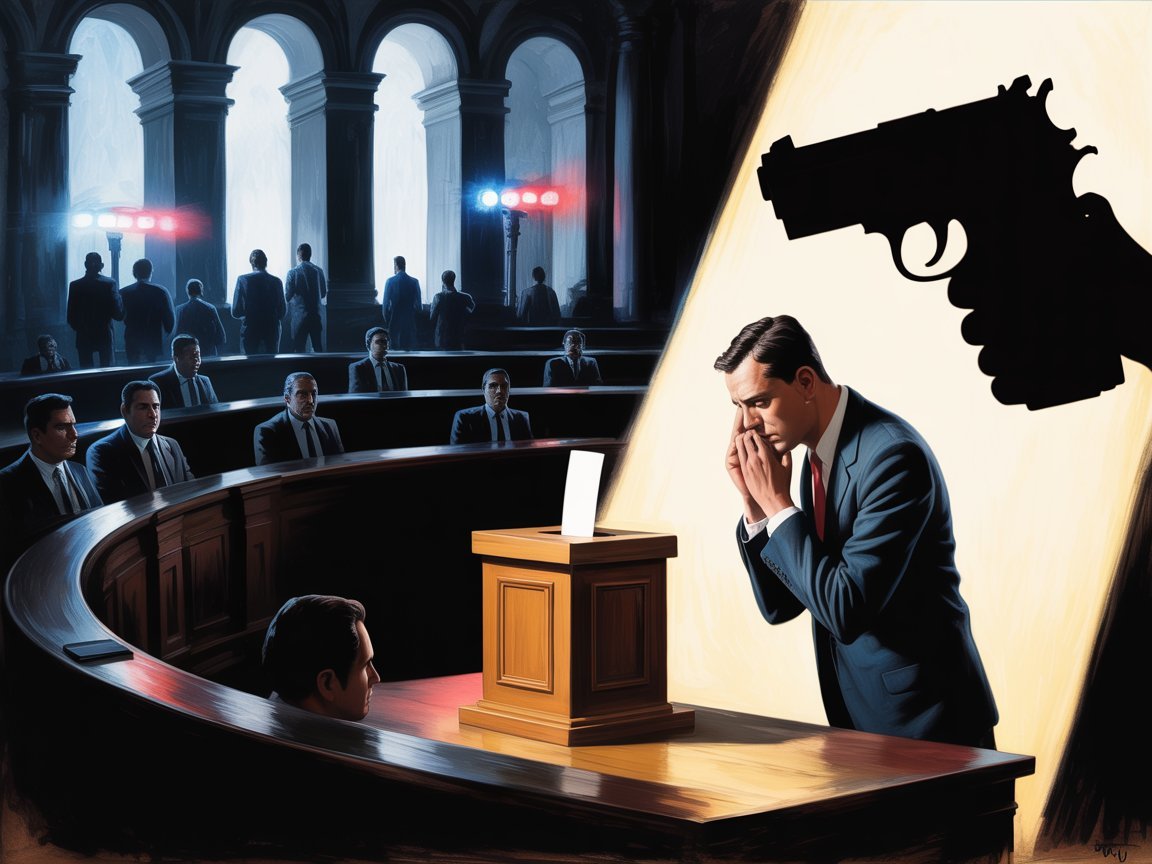
On January 8, 2024, Mexico City's House of Representatives voted on the ratification of Ernestina Godoy Ramos as Attorney General for a second four-year term. The environment around the vote — including an armed intimidation at the residence of an opposition legislator — marked one of the clearest examples to date of the ruling coalition's pressure architecture.
What Was at Stake
Ratification required 44 of 66 possible votes, a qualified majority. Morena and its allies did not hold that number entering the vote. In the days before the session, the ruling coalition deployed the full range of pressure instruments available to it — threats, inducements, and coordinated political pressure on opposition legislators designed to dissuade attendance or flip positions.
The Armed Intimidation
The night before the vote, PRI representative Guadalupe Barrón was subjected to a targeted attack at her residence. Unidentified individuals fired multiple rounds into her personal vehicle and then sent a text message to her mobile phone: "What happened is a notification. If on Monday you go to work, these will be put in your head, or your husband's, or your nephew's. You choose."
The Mexico City Attorney General's Office issued a press release acknowledging the attack, stating that it had learned of the incident through open-source reporting, invited the legislator to file a formal complaint, and denied any involvement by the office or its personnel.
A Broader Pattern
The Barrón incident was the most overt element, but not the only one. Political commentator Gibrán Ramírez — an academic specialized in political science and a former active Morena member — catalogued six distinct concerns tied to the Godoy tenure, including documented police extortion cases, the arrest of Alejandra Cuevas as part of a personal matter involving the federal Attorney General, the politically-managed handling of the Metro Line 12 accident investigation, and a thesis-plagiarism finding published in the week before the vote by LatinUS.
On January 6, 2024, PRI representative Tonatiuh González was briefly detained — an action widely read as an additional attempt to shape the floor count. Opposition leadership, including PRI national chair Alejandro Moreno, condemned both the Barrón attack and the González detention and confirmed a unified opposition position against ratification.
The Vote
The vote closed at 12:25 p.m. on January 8. Godoy received 41 votes in favor and 25 against. The ratification failed to meet the required 44-vote threshold. Godoy was required to step down from the position on January 9, 2024, with Oliver Ariel Pilares Viloria taking over as interim Attorney General. The process to present candidates for the permanent position returns to the local congress, which requires the same qualified majority.
The Supreme Court Context
The Godoy episode sits inside a broader pressure pattern against institutional counterweights. On December 14, 2023, President López Obrador — after the Senate rejected two successive presidential shortlists — became the first president to directly designate a Supreme Court justice without Senate ratification, appointing Lenia Batres Guadarrama to the 15-year term left open by Arturo Zaldívar's November 7, 2023 resignation. Zaldívar resigned to pursue a political role within the Claudia Sheinbaum campaign.
With the Batres appointment, the current administration has placed five justices on Mexico's Supreme Court, matching the total assigned under Felipe Calderón. Three of the five — Yasmín Esquivel Mossa, Loretta Ortiz Ahlf, and Lenia Batres — have generally voted with the administration's positions on controversial matters. The other two — Juan Luis González Alcántara Carrancá and Margarita Ríos-Farjat — have shown more independent voting patterns.
The Takeaways
The Barrón incident is one of the clearest examples in recent years of armed intimidation directed at a sitting legislator in connection with a single vote; it raises the baseline assumption for what the ruling coalition is prepared to do to secure outcomes.
The failure of the Godoy ratification shows that qualified-majority thresholds still function as real constraints when the opposition holds position; that finding is useful for any private operator modeling Mexican legislative risk.
The concentration of administration-aligned votes on the Supreme Court has narrowed the institutional channels through which controversial executive actions can be challenged, and the Batres precedent extends that condition well beyond the current presidential term.
For private operators with sensitive Mexico exposure, the practical implication is to shorten decision cycles and maintain independent counsel with demonstrated capacity to operate in constrained institutional environments.
The Intelligence Research Desk at GO PRIVATELY LLC
All information sourced from publicly available intelligence. Conditions evolve; verify current status before operational decisions.