Privacy First
Discretion as a travel design principle, not an afterthought.
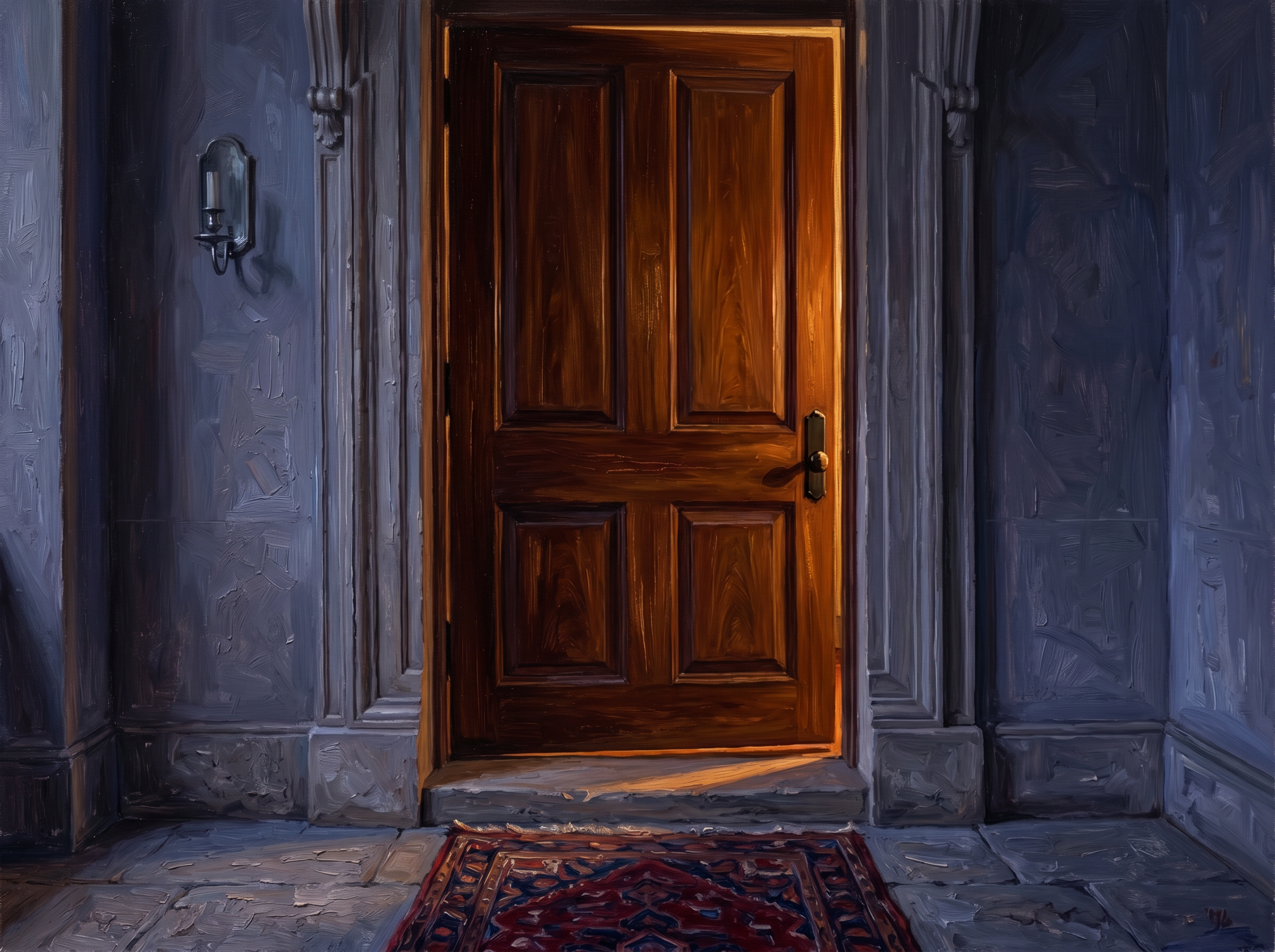
For the traveler whose life does not benefit from visibility, privacy is not a feature of the trip. It is the architecture.
The privacy spectrum
Travel privacy operates on a spectrum that most people never think about. At one end is full public visibility — the itinerary is known, the accommodations are tagged, the restaurants are geolocated in real time. Most travelers operate at this end without thinking about it, because it is how modern travel is designed to feel.
At the other end is full operational privacy — no digital footprint during the trip, no public-facing reservations under the principal's name, no photograph of a hotel lobby that would confirm the location. This end of the spectrum is not available by default. It is designed in, piece by piece, before the trip begins.
Where privacy is lost
Privacy is rarely lost in one large moment. It is lost in small, ordinary ones. A reservation confirmation email to an address that synchronizes with a work calendar. A luggage tag visible in a photograph taken in the lobby. A concierge who mentions the principal's name to a driver within earshot of the valet line. A restaurant that confirms a reservation by phone in front of another party at the next table.
None of these are failures of discretion on anyone's part. They are simply the default behavior of a travel industry that is built for visibility. The traveler who wants privacy is swimming against the current, and the current is constant.
The design principles
Privacy-first travel is designed around three principles, each of which is worked into the trip before it begins.
Minimal external footprint. Reservations held under the advisor or a trusted coordinator, not the principal. Loyalty numbers that do not link to the principal's public identity. Phones and laptops configured for the trip, not carried over from daily life. Photographs, when they happen, curated by the principal rather than produced by the venue.
Channel discipline. Trip-related correspondence moves through encrypted channels, not inboxes. Vendors who receive information receive only what they need. the principal's circle is briefed on what can be said, and what cannot, in the ordinary course of conversations with outsiders.
Venue and relationship selection. Some properties are chosen because their staff culture is built around privacy; others are chosen for reasons that have nothing to do with it. A five-star hotel in a trending neighborhood is often less private than a quiet compound a short drive away. The trade-off is rarely explained on a booking page.
What privacy is not
Privacy is not isolation. The principals we work with attend dinners, meetings, and public events when those events serve them. The question is not whether to be seen. It is where to be seen, by whom, and on whose terms. Privacy is a form of control over visibility, not the absence of it.
Privacy is also not secrecy. There is no shame in traveling well, staying at fine properties, or enjoying the experiences a well-designed trip provides. Privacy is about who participates in the traveler's life on that trip and about keeping the circle small enough that the experience belongs to the people in it.
What this means
Privacy is not a premium upgrade. It is an organizing principle. The traveler who wants it must build it in, from the reservation to the route, and the advisor who specializes in it does the building.
The Takeaways
Privacy is lost in small, ordinary moments. Confirmation emails, luggage tags, phone calls within earshot. The aggregate matters more than any single leak.
Privacy-first travel is designed in, not upgraded into. The principles — minimal footprint, channel discipline, venue selection — are applied before the trip begins.
The trendy property in the visible neighborhood is often less private than the quiet compound twenty minutes away. The difference is rarely on the booking page.
Privacy is not isolation or secrecy. It is a form of control over who participates in the principal's experience, and on whose terms.
A professional advisor builds privacy into the architecture of the trip, so the principal does not have to defend it in real time.
The Intelligence Research Desk at GO PRIVATELY LLC
All information sourced from publicly available intelligence. Conditions evolve; verify current status before operational decisions.