U.S. Airports on Day 37: What the TSA Shutdown Actually Means for Your Travel
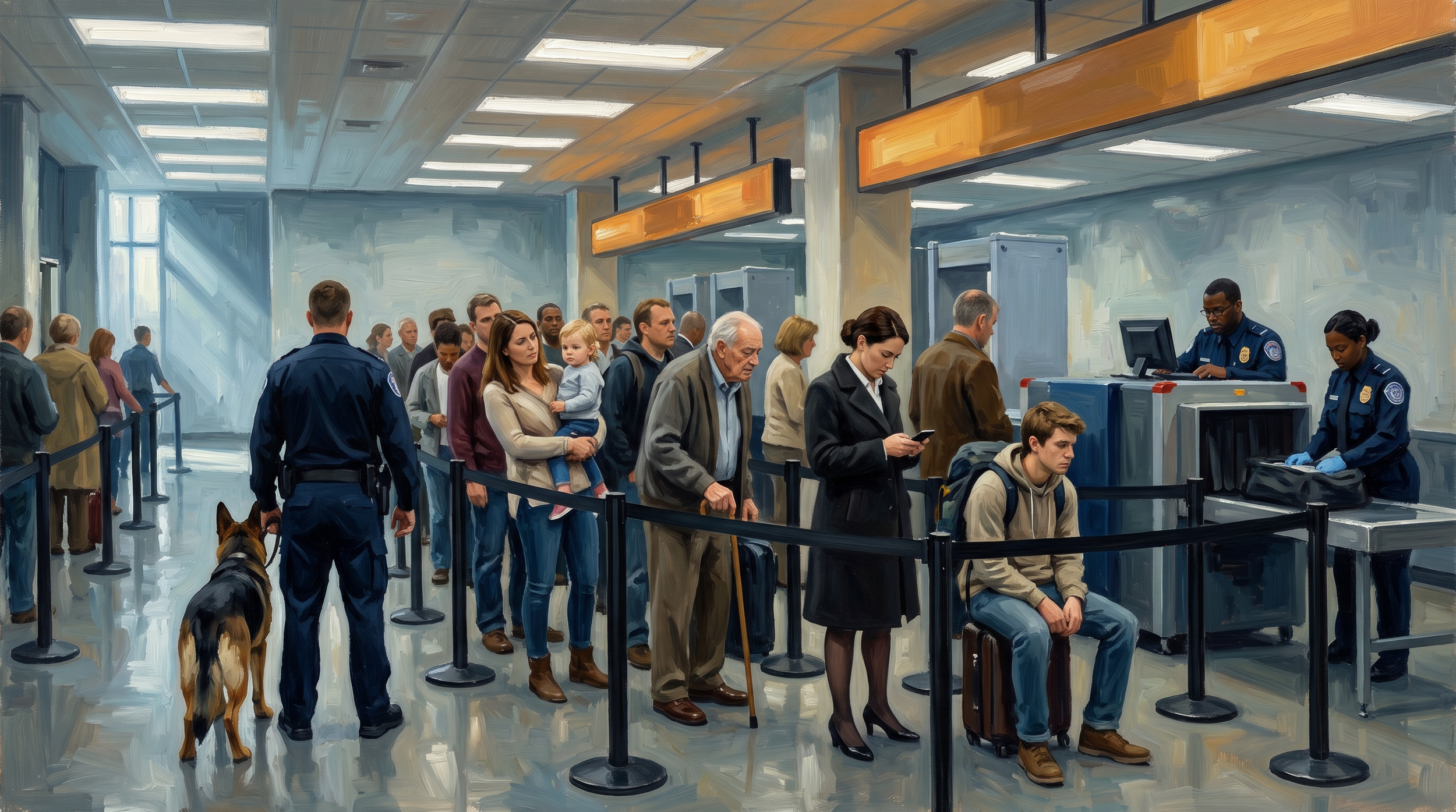
The partial DHS shutdown has turned a policy dispute into an operational crisis. With 50,000 TSA officers working without pay and callout rates above 50% at major hubs, the question is no longer whether this affects your travel — it is how badly.
The U.S. Department of Homeland Security entered partial shutdown on February 14, 2026. As of March 23, that is Day 37 — and there is no resolution on the legislative calendar before the next TSA pay cycle in early April.
The numbers are stark. Callout rates — officers simply not showing up — have reached 55% at Houston Hobby, 38% at Atlanta Hartsfield-Jackson, and over 30% at New Orleans. On March 22, only 4 of 18 screening lanes were open at Atlanta’s Hartsfield-Jackson, the world’s busiest airport. Wait times of three to five hours are now the baseline expectation at multiple major hubs, not a worst case.
This is the third government funding lapse in six months. That frequency is unprecedented. The acting TSA Administrator has explicitly forecast further deterioration. Peak spring break travel is compounding the staffing collapse at the worst possible moment.
Why a Deal Is Not Coming Soon
A bipartisan Senate funding vote failed on March 20, 47–37. The White House has tied DHS funding to the SAVE America Act, a voter ID bill, complicating any standalone resolution. Congress faces end-of-month recess with no deal expected before April.
The political dynamics do not favor speed. Neither party faces an immediate deadline that forces action. Meanwhile, every additional week without pay accelerates TSA attrition. Officers who can find alternative employment will. The workforce damage being done right now will not reverse the day a deal is signed — residual effects on TSA staffing and institutional morale will persist for weeks after any resolution.
Plan for a disrupted operating environment through at least late April.
The Two Routes Around the Problem
Private and charter aviation is the complete alternative for travelers with access to it. FBO departures — from fixed-base operators at private terminals — involve no TSA screening at all. For domestic travel, charter can often be arranged within 48 to 72 hours. VistaJet, Magellan Jets, XO, and BLADE have all reported strong demand since mid-February. Semi-private operator JSX, which departs from private terminals at Dallas Love Field, Oakland, and Burbank, is a cost-effective option for the routes it serves — also bypassing TSA entirely.
Routing through SPP airports is the best commercial alternative. Twenty U.S. airports use private security contractors under the TSA Screening Partnership Program and are fully unaffected by the shutdown. Key hubs include San Francisco (SFO) and Kansas City (MCI). During the same period Atlanta was showing five-hour queues, wait times at SPP airports were under three minutes. For commercial travelers whose routing can flex, this is the single most useful fact right now.
For those traveling through standard TSA-screened airports: Tuesday through Thursday midday departures carry the lowest compound risk. Avoid Friday afternoons and Sunday mornings, when callout rates peak. Arrive three hours before departure. Use individual airport the MyTSA app is unreliable under shutdown conditions.
International executives arriving in the United States should also note that CBP processing continues and Global Entry remains fully operational. Plan for extended processing windows at high-volume entry points — JFK, LAX, ORD, and MIA — during peak periods. TSA PreCheck combined with CLEAR provides time reduction at participating lanes for domestic travel, though staffing shortages can limit the benefit even for pre-screened travelers. Monitor carrier schedules closely: United Airlines announced flight cuts on March 20, and additional carriers may follow if conditions deteriorate further.
What This Means
The DHS shutdown has reached Day 37 with no legislative resolution imminent. TSA workforce attrition is accelerating, not stabilizing.
Three-to-five-hour wait times at major hubs are now a normal operating expectation. Plan schedules accordingly.
The 20 airports in the TSA Screening Partnership Program (including SFO and MCI) are fully unaffected — routing through them eliminates shutdown friction entirely for commercial travelers.
Private, charter, and semi-private aviation provides complete separation from TSA operations for domestic travel. For frequent business travelers, this is an operational decision with measurable time value.Even after a funding deal is reached, residual workforce attrition will affect TSA performance for weeks. This is not a disruption with a clean end date.
The Intelligence Research Desk at GO PRIVATELY LLC
Current as of 01:00 EDT, March 23, 2026. All information sourced from publicly available intelligence. Verify current airport conditions before travel decisions.